
Non-Slip Vinyl Flooring Installation: The Ultimate 2026 Safety Checklist

Updated: Jun 10
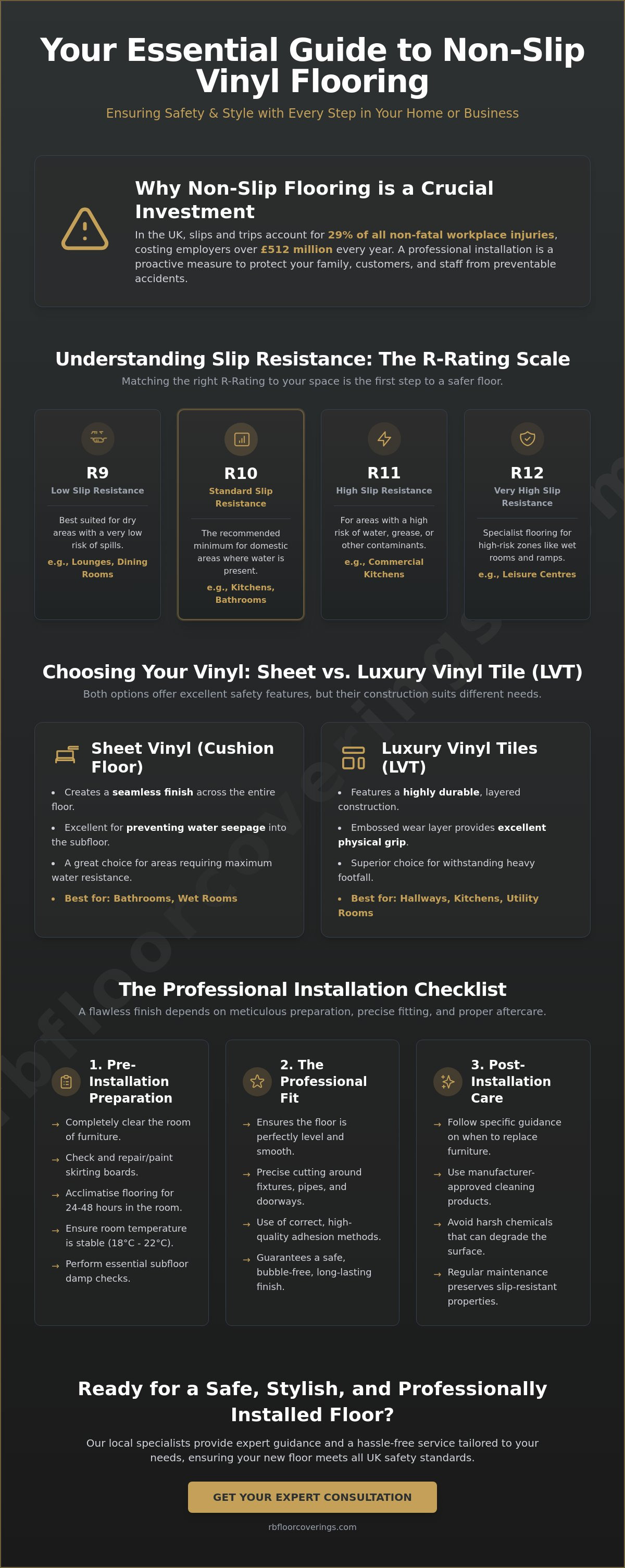
Did you know that slips and trips account for 29% of all non-fatal workplace injuries in the UK, costing employers over £512 million every year? When you're planning a non slip vinyl flooring installation, you're doing much more than just updating a room; you're making a proactive choice to protect your family, customers, or staff from preventable accidents. It is a vital investment in safety that requires both the right materials and a precise, professional touch.
It's natural to feel a bit lost amongst the technical talk of R-ratings and Pendulum Test Values, especially when you're also worried that a poor fitting job might lead to dangerous bubbling or peeling later on. You deserve a floor that looks stylish and modern whilst providing the peace of mind that it meets strict UK safety standards. We understand that you want a result that is both beautiful and dependable without the stress of managing complex technical requirements yourself.
This comprehensive guide ensures your home or business remains safe by helping you choose the right materials and find the professional expertise you need for a lasting result. We'll break down the essential 2026 safety checklist, explain exactly what those slip resistance levels mean for your specific space, and show you how a hassle-free installation from a local specialist can transform your property.
Key Takeaways
Understand how British safety standards and R-ratings, ranging from R9 to R12, help you select the most appropriate slip resistance for different areas of your property.
Learn why essential site preparation, such as subfloor damp checks and material acclimatisation, is critical for a smooth and long-lasting finish.
Discover how a professional non slip vinyl flooring installation ensures safety through precise cutting around fixtures and the use of the correct adhesion methods.
Identify the vital maintenance steps and cleaning products required to keep your new floor safe and slip-resistant for years to come.
Recognise the benefits of working with a local specialist who provides expert guidance and a hassle-free service tailored to your specific domestic or commercial needs.
Table of Contents
Understanding Slip Resistance Ratings and Vinyl Types
Choosing the right floor involves more than just selecting a beautiful pattern or a modern colour. For a truly safe environment, you need to look beneath the surface at how the material behaves when it's underfoot. Standard cushion floor is designed for comfort and warmth, but it can become incredibly hazardous the moment a drink is spilled or a wet umbrella is brought inside. A dedicated non slip vinyl flooring installation uses materials specifically engineered with raised textures or embedded particles, such as quartz or silicon carbide, to create friction even when moisture is present.
Terminology in the flooring industry can sometimes be confusing. You might see products labelled as "slip-resistant" or "anti-slip" and wonder if there is a real difference. Generally, slip-resistant refers to a floor's ability to reduce the likelihood of a fall, whilst anti-slip often denotes a higher grade of safety material designed for high-risk zones. To move past the marketing jargon, professionals rely on standardised slip resistance testing methods. These tests determine how much grip a surface provides in both dry and wet conditions, giving you a clear, data-backed rating to guide your purchase.
The R-Rating Scale Explained for Homeowners
The most common way to measure grip is the R-rating system, which ranges from R9 to R13. Understanding these numbers helps you match the floor to the specific needs of each room. R9 rated floors provide the lowest level of friction and are best suited for dry areas like lounges or dining rooms where spills are rare. For most domestic kitchens and bathrooms, R10 is considered the standard; it offers a reliable balance of safety and ease of cleaning for everyday life.
In contrast, R11 and R12 ratings are reserved for areas with a much higher risk of slips. These floors have a very high friction level and a noticeably textured surface. You will typically see these in commercial settings, such as professional kitchens, ramps, or leisure centre changing rooms, where the floor is frequently wet or greasy. For businesses requiring these high-specification surfaces, GW Flooring offers a range of industrial-grade floor coverings that meet all current UK safety standards.
Cushion Floor vs. Luxury Vinyl Tiles (LVT)
When planning your project, you'll likely choose between sheet vinyl (often called cushion floor) and Luxury Vinyl Tiles (LVT). Sheet vinyl provides a seamless finish, which is excellent for preventing water from seeping into the subfloor in a bathroom. However, LVT often provides a more durable safety surface. Because LVT is constructed in layers, it can feature a deeply embossed wear layer that mimics the natural grain of wood or the rugged texture of stone, providing physical grip points for your feet.
For a busy family home in Sheffield, LVT is often the superior choice for a non slip vinyl flooring installation in high-traffic areas like hallways or utility rooms. The toughened top layer ensures that the slip-resistant properties don't wear away quickly, keeping your home safe for years. Whether you prefer the sleek look of a single sheet or the premium feel of individual planks, selecting a product with a matte or satin finish will typically offer better grip than a high-gloss alternative.
Essential Pre-Installation Checklist: Subfloor and Site Prep
A successful non slip vinyl flooring installation depends on what happens before the first piece of material is even unrolled. Skipping the preparation phase is the most common reason for floor failure, leading to peeling edges or unsightly lumps that ruin the aesthetic. Before the fitters arrive, you should organise the removal of all furniture and old floor coverings to provide a completely clear workspace. This is also the perfect time to inspect your skirting boards; if they require painting or repairs, it's far easier to complete these tasks whilst the floor is bare.
Temperature plays a surprisingly large role in the final result. Vinyl is a flexible material that expands and contracts based on its environment. You must allow the new flooring to acclimatise in the room where it will be fitted for at least 24 to 48 hours. Ensure the room temperature is stabilised at a comfortable level, typically between 18°C and 22°C, to prevent the material from becoming too brittle or too soft during the fitting process. This steady environment allows the vinyl to settle into its natural shape, ensuring a more precise fit.
The Critical Importance of Moisture Testing
Dampness is the silent enemy of vinyl. If moisture is trapped beneath the surface, it will eventually cause the adhesive to fail, leading to bubbles and a floor that feels "spongy" underfoot. Whilst a visual check might show a dry surface, professional fitters use calibrated moisture meters to get an accurate reading of the subfloor's condition. Following official HSE guidance on slip resistance ensures that every safety factor is considered, including the integrity of the bond between the vinyl and the subfloor. For a safe and successful install, subfloor moisture must be below 75% relative humidity.
Levelling and Screeding for a Flawless Finish
Any imperfection in your subfloor will eventually "telegraph" through to the surface of your new vinyl. For wooden floorboards, we typically install a layer of high-quality flooring-grade plywood to create a uniform, flat base that prevents the lines of the boards from showing through. On concrete subfloors, a self-levelling compound, or screed, is often necessary to smooth out pits and ridges. A perfectly level base does more than just look good; it ensures the non-slip texture of your vinyl remains consistent across the entire room, preventing premature wear on high spots. If you're unsure about your subfloor condition, our expert flooring team can provide a professional assessment during a site visit.
The Professional Installation Journey: Precision and Safety
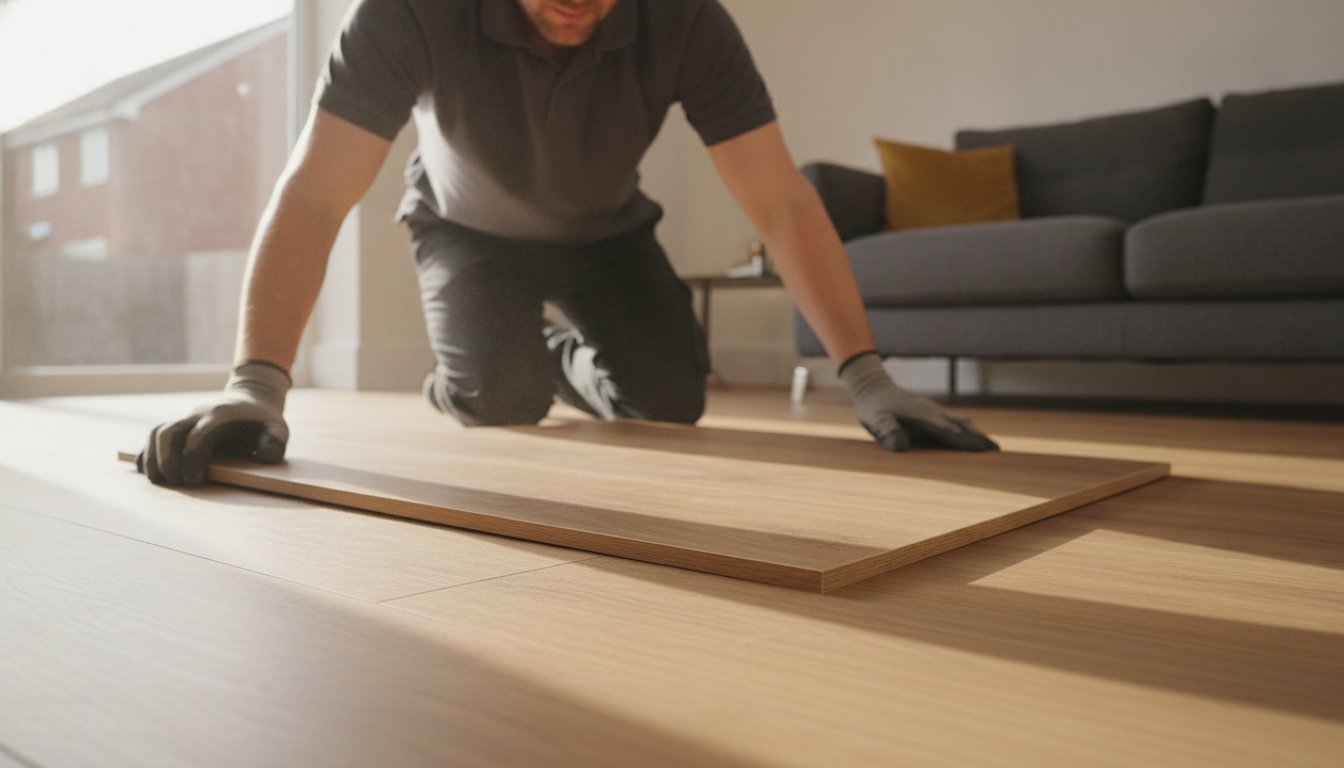
Once your subfloor is perfectly prepared, the physical transformation of your space begins. A professional non slip vinyl flooring installation is an exercise in meticulous detail. It isn't just about rolling out a sheet or clicking planks together; it’s about ensuring every corner and contour is handled with care. Experts use specialised tools to scribe and cut the vinyl around tricky obstacles like bathroom pedestals, toilet bases, and intricate door architraves. These precise cuts ensure there are no gaps where water can collect or edges where someone might catch their foot. A tidy finish around these fixtures is the hallmark of a seasoned fitter.
Maintaining the aesthetic is just as vital as the safety aspect. For patterned vinyl or LVT planks, fitters must align the design perfectly across the room whilst ensuring the safety grip remains consistent. This requires a keen eye for detail. High-quality adhesives play a silent but crucial role here. They prevent the floor from shifting or stretching over time. This is particularly important in areas with heavy foot traffic or where heavy appliances, such as washing machines, are moved. A floor that stays exactly where it was laid is a floor that remains safe.
Full-Bond Adhesion for Maximum Safety
Whilst some domestic installations use "loose-lay" or "perimeter stick" methods, full-spread adhesive is the gold standard for a truly safe floor. This method involves applying professional-grade adhesive, such as the systems supplied by Bondrite Adhesives Ltd, across the entire subfloor surface before laying the vinyl. It completely eliminates the risk of "rucking" or bubbling. These ripples are more than just an eyesore; they are significant tripping hazards. Most high-performance adhesives require a curing time of at least 24 hours. You'll need to avoid walking on the floor or replacing heavy furniture during this window to ensure the bond is permanent and secure.
Seam Sealing and Waterproofing the Edges
In larger rooms where a single sheet isn't wide enough, professional seam sealing is essential. Fitters use cold-welding techniques to join pieces together, creating an invisible and completely waterproof bond. This is a critical step for commercial kitchen safety and domestic wet rooms, as it prevents moisture from reaching the subfloor. Following the best practices highlighted by the UK Slip Resistance Group, we also apply a neat bead of silicone sealant around the perimeter. This provides an extra layer of protection against water ingress. It ensures your safety flooring remains hygienic and secure for its entire lifespan.
Post-Installation Checklist: Maintenance for Lasting Safety
Once your non slip vinyl flooring installation is complete, it's tempting to immediately move your furniture back and enjoy the new look. However, patience is key to ensuring the long-term safety and stability of the floor. You should wait at least 24 to 48 hours before placing heavy appliances or large items of furniture on the surface. This window allows the professional-grade adhesives mentioned in the previous section to cure fully, preventing any movement or indentations that could compromise the level finish and create future trip hazards.
Regular inspections are a simple but effective way to maintain a safe environment. You should walk your floor every few months, paying close attention to high-traffic zones like doorways or the area in front of the kitchen sink. Look for any signs of lifting at the seams or edges. Catching these minor issues early prevents them from becoming significant risks. If you notice any changes in the floor's behaviour or appearance, it's best to seek professional advice before the problem escalates.
Choosing the Right Cleaning Routine
Many people reach for standard soapy detergents, but these can leave a microscopic film on the surface. This residue actually fills in the safety texture, making a non-slip floor surprisingly slick when wet. Instead, use pH-neutral cleaners that preserve both the colour and the vital grip. For stubborn scuffs, a soft cloth and a dedicated vinyl cleaner will usually do the trick without stripping the protective wear layer. Avoid steam mops; the intense heat can break down the adhesive bond and cause the vinyl to warp, creating uneven surfaces that are difficult to fix.
Protecting Your Investment
Small preventative measures make a huge difference in the lifespan of your floor. Attach felt pads to the legs of chairs and tables to stop deep gouges from forming when furniture is moved. Place high-quality entrance mats at every external door to catch grit and dirt. Small stones act like sandpaper underfoot, gradually grinding down the slip-resistant finish and dulling the aesthetic. Regular sweeping is the easiest way to maintain slip resistance by keeping these abrasive particles away from the surface.
If you're ready to upgrade your home with a floor that stays safe and stylish for years, contact our expert fitting team today for a professional consultation and a results-driven service.
Expert Non-Slip Vinyl Fitting in Sheffield and South Yorkshire
Local expertise is essential for a successful non slip vinyl flooring installation. South Yorkshire features a diverse range of property types, from characterful Victorian terraces in Sheffield to contemporary new builds in Rotherham and Worksop. Each of these buildings presents unique challenges, particularly regarding subfloor conditions and moisture levels. Our team understands these regional nuances. We provide an end-to-end service that manages every detail, from the initial expert measurement to the final professional fitting, ensuring your safety remains the top priority.
Choosing a mobile flooring specialist saves you the inconvenience of travelling to a busy retail park. We bring our expertise directly to your door, offering a service that is both personal and professional. This approach allows us to focus entirely on your project, providing a "can-do" attitude that simplifies the entire experience. We take the time to explain the technical aspects of your new floor, helping you feel confident that your investment meets the high standards required for a safe home or workplace.
The Mobile Showroom Experience
Lighting in a large warehouse is often harsh and artificial, which can make colours look different than they would in a domestic setting. By viewing non-slip vinyl samples in your own home, you can see how the textures and tones interact with your specific decor and natural light. This eliminates the guesswork and ensures you're happy with the final look. To get started with a professional measurement and a detailed assessment of your space, you can book a home flooring survey Sheffield today.
Commercial Non-Slip Solutions for Local Businesses
Safety is a non-negotiable requirement for local businesses, particularly those in the care, education, and retail sectors. We provide bespoke safety flooring solutions for South Yorkshire nurseries, care homes, and shops, ensuring every project is fully compliant with modern regulations. Our range includes certified R11 and R12 vinyl options designed for high-risk environments where moisture or spills are frequent. For business owners managing larger projects, our commercial flooring contractors South Yorkshire offer the reliability and technical knowledge needed to deliver a durable, slip-resistant finish that protects your staff and the public alike.
Secure Your Space with Confidence
Safety underfoot is a fundamental requirement for any modern home or business. By understanding the importance of R-ratings and committing to thorough subfloor preparation, you've already taken the first steps toward a more secure environment. A high-quality non slip vinyl flooring installation is more than just a renovation; it's a long-term commitment to protecting everyone who walks through your door. Whether you're upgrading a busy family kitchen or a high-traffic commercial washroom, the combination of the right safety grade and a professional fitting ensures a result that is both beautiful and dependable.
You don't have to manage this process alone. Our mobile showroom brings a wide range of samples directly to your home or business, allowing you to choose the perfect finish in your own unique lighting. Our expert fitters serve Sheffield, Rotherham, and Worksop, providing a seamless, end-to-end professional supply and fitting service that takes the stress out of your project. Book your free home consultation with RB Floor Coverings today and let us help you create a floor that prioritises safety without compromising on style. We look forward to helping you transform your property into a safer, more welcoming space.
Frequently Asked Questions
Is non-slip vinyl flooring actually waterproof?
Yes, the material itself is completely waterproof. Whilst the vinyl won't absorb moisture, the success of your non slip vinyl flooring installation depends on how the edges and seams are sealed. In rooms like bathrooms or commercial kitchens, we use professional-grade sealants to prevent water from seeping through to the subfloor. This ensures your safety floor remains hygienic and stable even in the dampest environments.
Can I install non-slip vinyl over my existing floor tiles?
Whilst it is technically possible to lay vinyl over tiles, we generally advise against it. Existing tiles are rarely perfectly flat, and grout lines can eventually show through the vinyl, a process known as "telegraphing." To achieve a professional finish, it's usually better to remove the old tiles or apply a high-quality levelling compound. This creates the smooth, even base required for the vinyl to bond correctly.
What is the best non-slip vinyl for a bathroom?
For a domestic bathroom, an R10 rated vinyl is usually the best choice. It provides a reliable level of grip for everyday use whilst remaining easy to clean. You can choose between Luxury Vinyl Tiles (LVT) for a premium, textured feel or high-quality sheet vinyl for a seamless, water-resistant finish. Both options offer excellent safety properties when installed correctly by a local specialist.
How much does professional vinyl flooring installation cost in Sheffield?
The total cost of your project depends on several factors, including the room dimensions, the type of vinyl you select, and the amount of subfloor preparation required. Every home and business is different, so we don't provide a "one-size-fits-all" price. Instead, we offer a tailored assessment to give you an accurate quote that reflects the specific needs of your property and ensures a high-quality, lasting result.
How long does a typical vinyl flooring installation take?
A standard domestic non slip vinyl flooring installation in a single room, such as a kitchen or bathroom, usually takes one day to complete. This timeframe includes the final subfloor preparation and the fitting itself. If your project involves multiple rooms or extensive repairs to the base floor, it may take a little longer. We always aim to minimise disruption and will provide a clear schedule before work begins.
Do I need underlay for non-slip vinyl flooring?
Not all vinyl requires a separate underlay. Many modern Luxury Vinyl Tiles come with a pre-attached acoustic backing that provides comfort and sound reduction. For traditional sheet vinyl, we focus on creating a perfectly smooth subfloor using plywood or a levelling screed rather than a separate underlay. Using a thick, soft underlay with vinyl can actually cause the material to dent or the seams to open over time.
How do I know if my vinyl is truly slip-resistant?
You can verify the safety level by checking the product's technical specifications for an R-rating or a Pendulum Test Value (PTV). In the UK, a PTV of 36 or higher in wet conditions is the standard for low slip potential. Most reputable manufacturers clearly label their products with these ratings. If you're unsure, we can explain these technical details during our home visit and show you samples that meet these standards.
Can non-slip vinyl be used with underfloor heating?
Yes, most high-quality vinyl flooring is perfectly compatible with underfloor heating systems. Vinyl is an efficient conductor of heat, allowing your room to warm up quickly and evenly. It's important to use a heat-resistant adhesive during the installation and ensure your system doesn't exceed the manufacturer's recommended temperature limit, which is typically 27°C. This prevents the material from warping or the bond from failing.



Comments